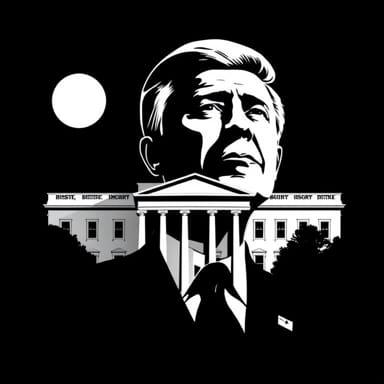
In the aftermath of the American Civil War, the United States entered a critical period known as Reconstruction, during which the nation faced the challenge of rebuilding the South and redefining the status of formerly enslaved people. The president who oversaw most of Reconstruction was Ulysses S. Grant, who served from 1869 to 1877. While Andrew Johnson initiated the earliest phases after Abraham Lincoln’s assassination, it was under President Grant’s leadership that the federal government more fully implemented and enforced Reconstruction policies. His presidency was marked by both significant progress and deep challenges in restoring national unity, ensuring civil rights, and redefining federal authority in the South.
Grant’s Rise to the Presidency
Ulysses S. Grant gained national fame as the commanding general of the Union Army who led the North to victory in the Civil War. His military leadership and close association with President Lincoln made him a popular and trusted figure. In 1868, the Republican Party nominated Grant for president, emphasizing his loyalty to Union values and commitment to Reconstruction.
Grant’s campaign slogan, ‘Let us have peace,’ appealed to a war-weary public while signaling a promise to maintain the gains of the Union victory. He won the election and took office in March 1869, inheriting a nation divided not only geographically but also socially and politically, particularly over the issues of race, citizenship, and states’ rights.
Reconstruction Goals under Grant
As president, Ulysses S. Grant aimed to fulfill several key goals of Reconstruction:
- Protect the civil rights of African Americans
- Reintegrate Southern states into the Union under fair terms
- Support Republican governments in the South
- Suppress violent resistance such as the Ku Klux Klan
- Stabilize the national economy and federal institutions
These objectives were challenged by persistent racism, Southern resistance, political divisions, and corruption, but Grant’s administration took decisive actions to move Reconstruction forward.
Enforcement of Civil Rights
One of the defining features of Grant’s presidency during Reconstruction was the federal government’s effort to protect the newly granted rights of African Americans, particularly the rights to vote, hold office, and receive equal protection under the law. This commitment was expressed through the enforcement of the Reconstruction Amendments:
- 13th Amendment: Abolished slavery
- 14th Amendment: Granted citizenship and equal protection
- 15th Amendment: Protected voting rights regardless of race
Grant supported legislation that backed these constitutional rights. His administration worked with Congress to pass the Enforcement Acts of 1870 and 1871, which allowed federal troops and courts to suppress groups like the Ku Klux Klan that used violence and intimidation to undermine African American suffrage and political participation.
Combatting the Ku Klux Klan
Grant’s response to white supremacist violence was especially significant. The Ku Klux Klan had emerged as a major threat to Reconstruction by terrorizing Black voters and Republican officials. In 1871, Congress passed the Ku Klux Klan Act, giving the president authority to use military force and suspend habeas corpus in areas where civil rights were under attack.
Grant used these powers effectively. Federal troops were deployed to arrest Klan members, and many of the organization’s leaders were prosecuted. While the Klan was not eradicated entirely, Grant’s actions significantly reduced its influence during his presidency and demonstrated the federal government’s willingness to uphold civil rights through force when necessary.
Political Challenges and Southern Resistance
Despite his efforts, Grant faced persistent opposition from Southern Democrats and former Confederates who sought to reestablish white supremacy and undermine Reconstruction policies. Many Southern states implemented Black Codes and other discriminatory laws to limit African American freedoms and restore the old social order.
Grant also encountered difficulty maintaining support in the North, where many voters grew tired of the ongoing military presence in the South and the high cost of Reconstruction. The economic Panic of 1873 further diverted attention from Southern issues and led to declining public support for Reconstruction programs.
Corruption and Scandals
Another issue that marred Grant’s presidency was corruption. Several scandals during his administration, such as the Credit Mobilier affair and the Whiskey Ring, involved high-ranking officials and undermined public trust in the federal government. Although Grant himself was not directly involved in these scandals, his loyalty to friends and political allies made him reluctant to remove corrupt individuals.
These controversies weakened his administration’s moral authority and gave Democrats an opportunity to argue for a return to conservative, limited government one that would bring Reconstruction to an end.
Reconstruction Begins to Unravel
As Grant’s second term progressed, the tide of Reconstruction began to recede. Northern voters grew disillusioned, and Southern white supremacist groups regained control in many areas through both legal and violent means. Republican governments in the South were increasingly vulnerable, and by the mid-1870s, Democrats had taken control of several state legislatures.
Despite these setbacks, Grant remained committed to civil rights enforcement. In 1875, he signed the Civil Rights Act, which aimed to prohibit racial discrimination in public accommodations, education, and jury service. However, the law lacked strong enforcement mechanisms and was later weakened by the Supreme Court.
End of Grant’s Presidency and Legacy
Grant left office in 1877, just as the formal period of Reconstruction was coming to an end. His successor, Rutherford B. Hayes, would ultimately withdraw federal troops from the South as part of the Compromise of 1877, effectively ending federal enforcement of Reconstruction laws and allowing white supremacist governments to rise unchecked.
Despite the challenges and criticisms, Grant’s presidency marked the high point of federal commitment to Reconstruction. His support for civil rights, military intervention against domestic terrorism, and efforts to stabilize Southern politics left a lasting, if incomplete, legacy.
Ulysses S. Grant was the president who oversaw most of Reconstruction, and his leadership shaped the course of post-Civil War America. While he is often remembered for the scandals of his administration, his firm stance on civil rights and his willingness to use federal power to protect African Americans distinguish his presidency during one of the nation’s most turbulent eras.
Grant’s Reconstruction legacy is a mix of progress and struggle. He helped lay the foundation for civil rights in the United States, even as those rights were later eroded by the retreat of federal authority and the rise of Jim Crow laws. His time in office serves as a reminder of the importance of federal commitment in protecting justice, equality, and the rule of law during periods of national reconstruction and transformation.